
Wisconsin Area Codes and Their Regions
Eight area codes serve Wisconsin, and they sort into five regions. Milwaukee holds 414 by itself. The southeastern suburbs hold 262 by themselves. The other three regions each run as a pair, where an older code and a newer one cover identical territory. That pairing is the single most useful thing to know about Wisconsin area codes, because it explains why the code alone no longer tells you much about where a phone sits.
The Public Service Commission of Wisconsin publishes the official picture. Its Wisconsin area code map groups the state as 715 and 534 in the north and much of the west, 920 and 274 in the east and northeast, 414 in Milwaukee, 262 in the southeast outside Milwaukee County, and 608 and 353 in the southwest and south-central counties. PSC also explains the mechanics in plain terms: an area code is the first three digits of a ten-digit number, and a code runs out when every central office code behind it has been handed out.
| Area Code | Coverage | Year Assigned | Overlay Status |
|---|---|---|---|
| 414 | Milwaukee and the Milwaukee County exchanges around it | 1947 | No overlay in the current sweep |
| 715 | Superior, Eau Claire, Wausau, Ashland, Rhinelander, Minocqua, Hayward, Rice Lake, Merrill, Antigo | 1947 | Paired with 534 since 2010 |
| 608 | Madison, Beloit, Janesville, La Crosse, Middleton, Monroe, Platteville, Stoughton, Sun Prairie, Wisconsin Dells | 1955 | Paired with 353 since 2023 |
| 920 | Green Bay, Appleton and the Fox Cities, Oshkosh, Fond du Lac, Door County, Manitowoc, Sheboygan, De Pere, Neenah | 1997 | Paired with 274 since 2023 |
| 262 | Waukesha, Racine, Kenosha, Brookfield, Menomonee Falls, Mequon, New Berlin, Muskego, the Lake Geneva area | 1999 | No overlay in the current sweep |
| 534 | Identical territory to 715 | 2010 | Overlay code |
| 274 | Identical territory to 920 | 2023 | Overlay code, in service May 5, 2023 |
| 353 | Identical territory to 608 | 2023 | Overlay code, assignments from September 15, 2023 |
Which Wisconsin Area Code Covers Your City
Region beats city when you are guessing at a Wisconsin area code. A number in Wausau and a number in Superior sit hundreds of miles apart and share 715, while Milwaukee and Wauwatosa sit side by side and split between 414 and 262. The county lines matter more than the city limits, and the overlay pairs mean any community in three of the five regions can hold either code in the pair.
- Milwaukee core - 414 for the city and the Milwaukee County exchanges, including the 414-286 range the city uses for services
- Southeast suburbs and lakefront - 262 from Waukesha and Brookfield through Racine, Kenosha, Mequon, and Lake Geneva
- Southwest and south-central - 608 or 353 for Madison, Janesville, Beloit, La Crosse, Platteville, and Wisconsin Dells
- East and northeast - 920 or 274 for Green Bay, Appleton, Oshkosh, Fond du Lac, Sheboygan, Manitowoc, and Door County
- North and west-central - 715 or 534 for Eau Claire, Wausau, Superior, Rhinelander, Hayward, and the northern lake country
The Wisconsin 608 region is documented down to the county level, because NANPA had to describe it precisely when the overlay was approved. Planning Letter PL-605 lists all or part of Adams, Buffalo, Columbia, Crawford, Dane, Grant, Green, Iowa, Jackson, Jefferson, Juneau, La Crosse, Lafayette, Marquette, Monroe, Richland, Rock, Sauk, Trempealeau, Vernon, and Walworth counties. The letter then states that 353 serves the same geographic area as 608, with no line drawn between them.
Note: Wisconsin area code boundaries follow telephone exchange lines rather than city limits, so a suburb can sit in a different code than the city next to it.
Overlay or Split in Wisconsin
Both methods solve the same problem, which is running out of numbers, but they land on residents very differently. A split redraws the map and hands part of the state a new code, so some people lose the number they had. Wisconsin went that route three times, in 1955, 1997, and 1999, each time carving territory out of 414. An overlay leaves the map alone and stacks a second code on top of it. Nobody changes a number, and the trade is that every local call has to include the area code.
- Overlay
- Two codes covering one map. Existing lines keep their numbers, and new lines may be issued from either code, so ten-digit dialing becomes the rule.
- Split
- One map cut in two. Part of the region keeps the old code and the rest is moved onto a new one, which means new numbers for everyone in the moved area.
- Permissive Dialing
- The grace window while a change beds in. Seven-digit and ten-digit calls both go through until a set date, after which only the longer form works.
Wisconsin has used overlays exclusively since 2010, which is why 534, 274, and 353 exist without a single Madison, Green Bay, or Eau Claire resident having to reprint a business card. PSC made that point directly when 353 launched: customers keep their existing numbers, and the price of a call does not change because a second code was added.
Dialing Rule for Wisconsin Area Codes
In the overlay regions, a local Wisconsin call takes all ten digits. NANPA's planning letter for the 353 overlay states that mandatory ten-digit local dialing was already in force across 608 before the overlay arrived. Local, extended area service, and extended community calling all take ten digits. Toll calls take 1 plus ten digits, and operator handled calls take 0 plus ten digits. The 920 region moved to ten digits in connection with the national 988 change, which removed seven-digit dialing anywhere a 988 prefix would have conflicted.
Important: Seven-digit local calls no longer connect in the Wisconsin overlay regions. Dial the area code every time, even when you are calling next door.
Three-digit service codes are the exception and are not affected by any of this. PSC Wisconsin states that customers can still dial 911, 211, 311, 411, 511, 611, 711, 811, and 988 as three digits wherever those services exist. The full set of Wisconsin phone codes, including the star codes and the toll-free prefixes, sits on its own page.
History of Wisconsin Area Codes
The Wisconsin story starts with two codes and grows to eight. AT&T built the North American Numbering Plan in 1947 so long distance calls could be dialed without an operator, and Wisconsin was handed 414 and 715 in that first assignment. Everything since has been a response to demand, first from fax lines and pagers, then from mobile phones and VoIP service. Each new wave used up central office codes faster than the last.
| Year | Event |
|---|---|
| 1947 | Wisconsin receives 414 for the south and east and 715 for the north |
| 1955 | 608 splits from 414 for the southwest and south-central counties |
| 1997 | 920 splits from 414 for Green Bay, the Fox Cities, and the lakeshore |
| 1999 | 262 splits from 414 for the southeastern suburbs |
| 2010 | 534 arrives as an overlay on 715 |
| 2021 | Ten-digit dialing expands where a 988 prefix conflicted with seven digits |
| 2023 | 274 enters service for the 920 region on May 5 |
| 2023 | 353 begins assignment in the 608 region on September 15 |
The split years left a mark on Wisconsin regional identity that outlived the numbering change. 414 still reads as Milwaukee. 608 still reads as Madison and state government. 920 belongs to Green Bay and the Fox Valley, and 715 belongs to the north. The newer codes carry none of that yet, which is why a 353 or 274 number can feel unfamiliar even to lifelong residents.
Exchange Prefixes Under Each Wisconsin Area Code
Under every Wisconsin area code sits a layer of three-digit prefixes. Telephone people call them central office codes, or NXX for short, and they are the three digits that follow the area code. PSC ties the two layers together when it explains area code exhaust: a code runs dry once all of its central office codes have been assigned. That is the arithmetic that produced 534, 274, and 353.
NANPA publishes the assignment records, and Wisconsin appears in the Central-North region alongside Iowa, Illinois, Indiana, Kentucky, Michigan, Minnesota, and Ohio. The central office code assignment records come down as zipped text files, sorted by state and then by NPA and NXX.
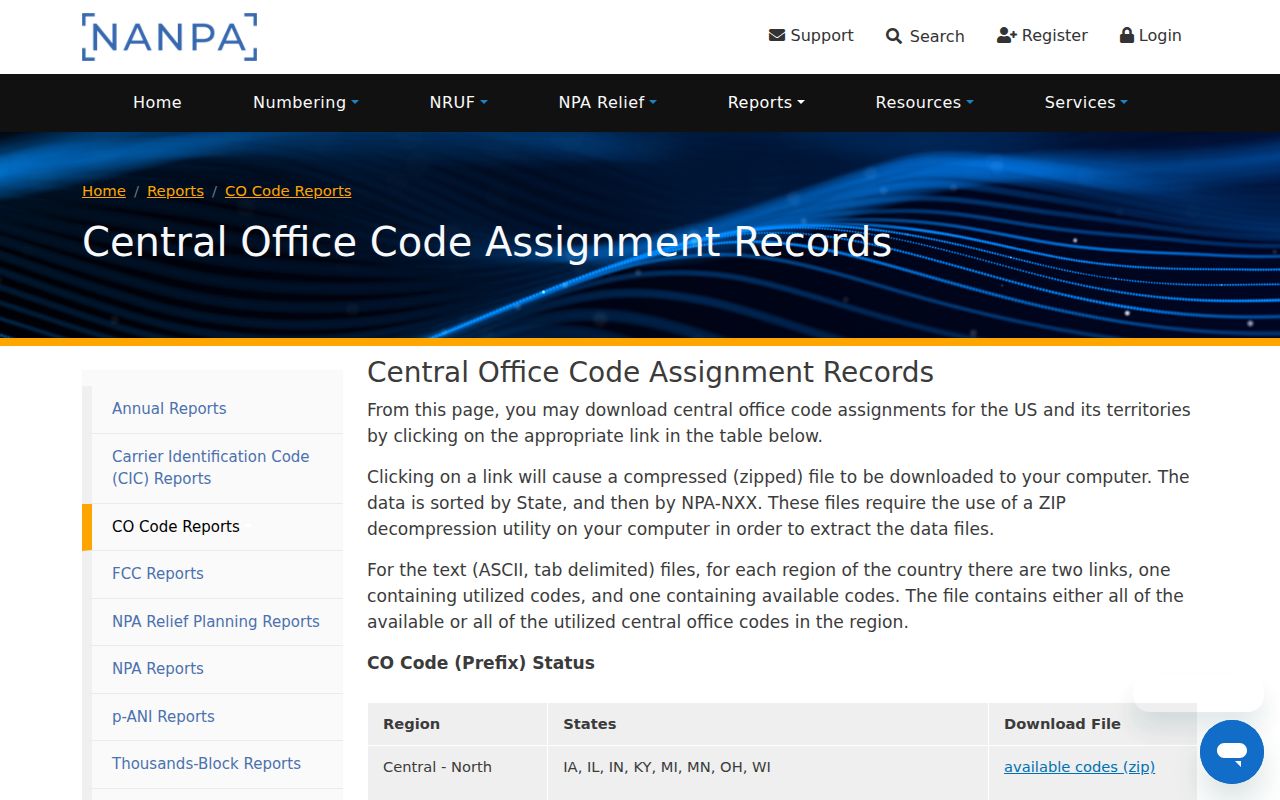
Some Wisconsin prefixes are recognizable on sight. 608-266 carries a great deal of state and Madison city government traffic. 414-286 belongs to Milwaukee city services. 920-448 covers Green Bay City Hall and Brown County administration. 262-548 reaches the Waukesha County Clerk. Those patterns are useful clues, but they are not proof, because a number can keep its prefix after moving to a new carrier and caller ID can be faked outright.
Future Wisconsin Area Codes
No additional Wisconsin relief code turned up beyond the two overlays already running. 274 and 353 were the answer to the forecasts that mattered, and both are still young. Relief planning is a slow process by design, so the next signal would appear well before any new code did.
Two places carry that signal. NANPA posts relief planning letters that can be filtered by year, letter number, area code, or state. PSC Wisconsin runs the state side through its own dockets, including 5-TN-106 and 5-TN-112. For Wisconsin residents, a new overlay would mean almost nothing in practice. Existing numbers stay put, and the dialing habit is already ten digits in the regions most likely to need help.
Verifying a Wisconsin Area Code
Checking whether a Wisconsin code is real takes about a minute. NANPA's NPA reports hub holds the area code search, the NPA database, the dialing plan reports, and the list of codes that require ten-digit dialing.
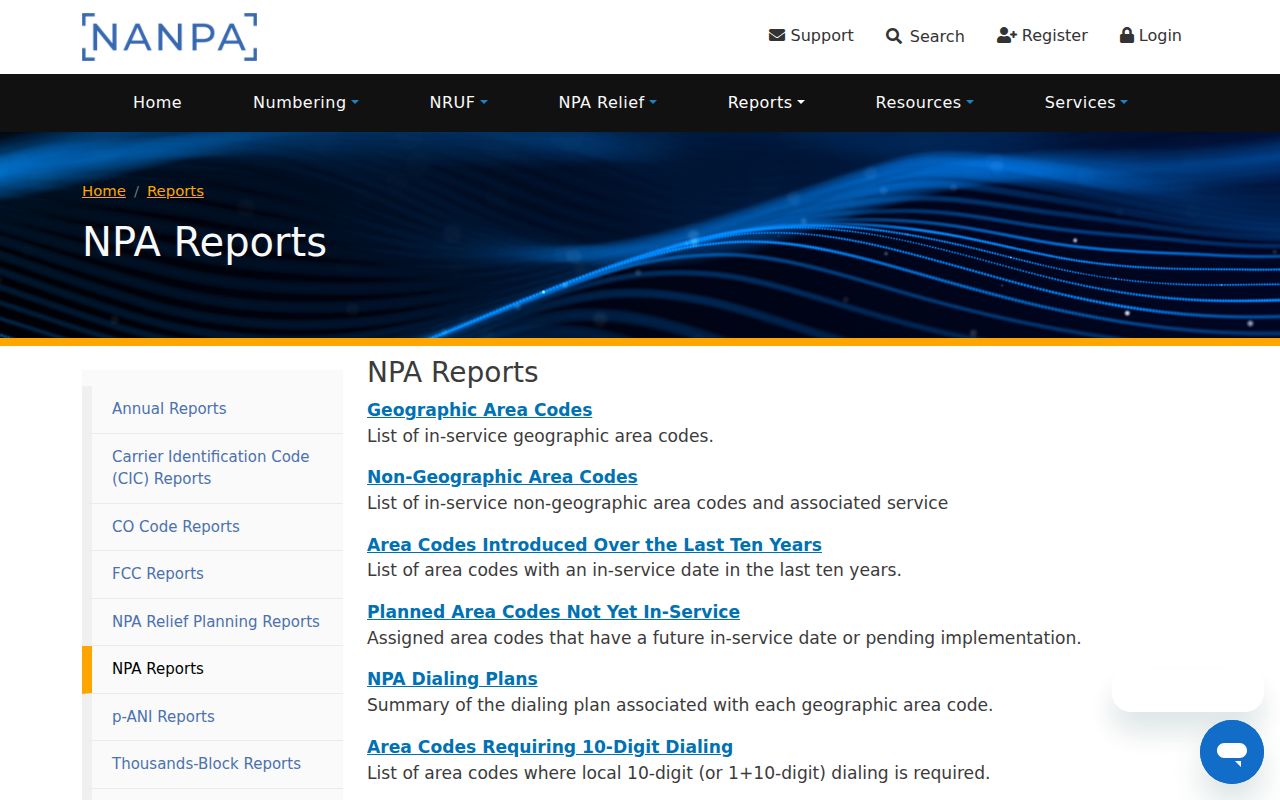
Run the code through that database and you learn whether it exists, which state it belongs to, and whether it is part of an overlay. That is enough to catch the common trick of a caller claiming to be a Wisconsin office while showing a code that serves somewhere else entirely.
Note: A Wisconsin area code on caller ID proves nothing about where a call started, since spoofing lets any number appear on the screen.